Olivia Griffin · 19 November 2026
Railway upgrades reshape daily routines for Shawmill families facing housing cost pressures
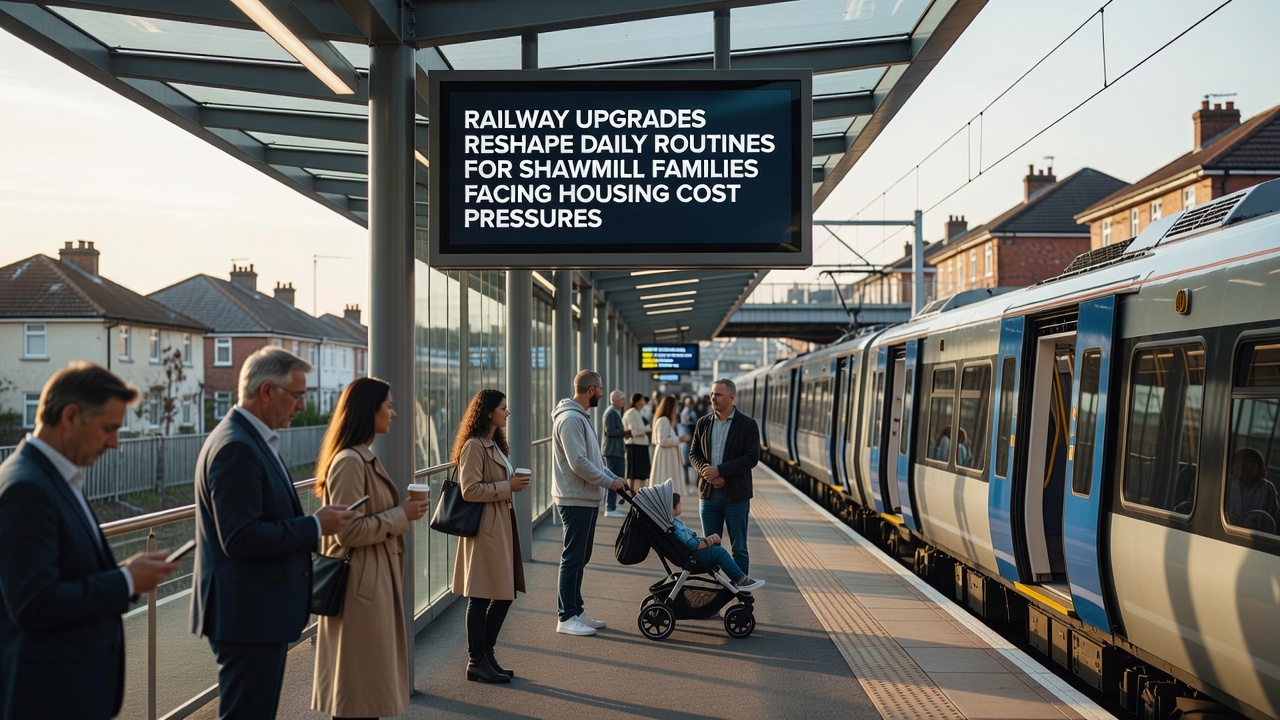
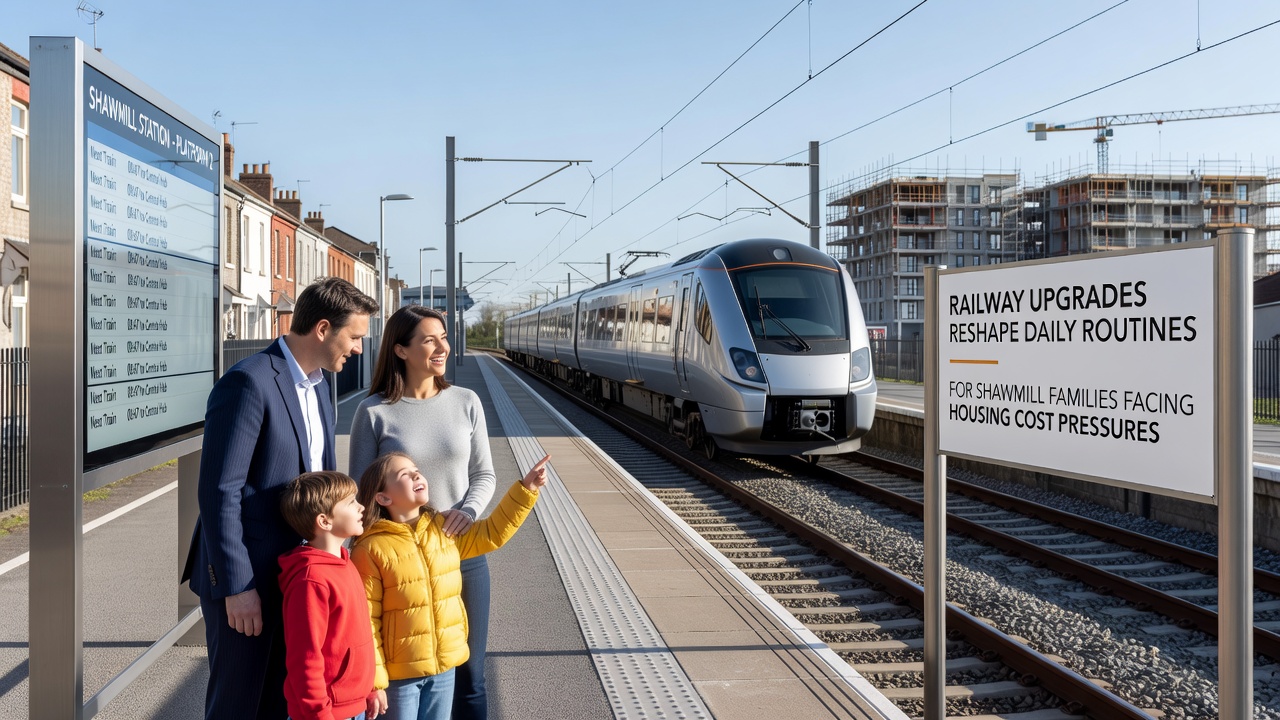
Shawmill railway upgrades continue to alter commuting patterns for local families who balance housing expenses with work and school schedules, and these changes have accelerated through late 2026 as new track sections and timetable revisions take effect. Families report adjustments to departure times, childcare arrangements, and weekend activities because faster services and occasional closures force revised planning, while data from regional transport authorities show rising passenger volumes on the upgraded lines since early 2025.
Commuting patterns shift under new schedules
Trains now run at higher frequencies during peak hours, allowing some residents to reach employment hubs 20 minutes earlier than before the upgrades began, and this time saving lets households extend searches for more affordable housing options farther from Shawmill town centre. Yet station works that started in March 2026 have introduced temporary bus replacements on certain days, which extend journeys by up to 45 minutes and require parents to coordinate school drop-offs with revised train times. Observers note that households facing elevated mortgage or rental payments often select properties along the rail corridor to minimise fuel costs, and November 2026 timetables released last month list additional evening services that support later work shifts common in logistics and healthcare sectors.
Housing cost pressures influence location choices
Property records indicate average asking prices in Shawmill have risen 12 percent over the past two years, pushing families toward villages served by the upgraded line where monthly housing outlays remain lower despite longer commutes. Research from the Australian Department of Infrastructure, Transport, Regional Development, Communications and the Arts reveals similar patterns in comparable regional networks where rail improvements coincide with outward migration from higher-cost urban cores. Families describe stacking household tasks around train departures, such as preparing meals during the return journey or sharing lifts to stations, and these adaptations free budget for essentials while housing costs consume larger portions of income.
Daily routines adapt around service changes
School runs now incorporate earlier departures because connecting buses align with revised train schedules, and parents who previously walked children to local schools sometimes drive to stations instead. Evening routines change as well when delayed services arrive after 7 pm, prompting families to rearrange dinner preparation and homework supervision into shorter windows. One study from the European Commission’s Directorate-General for Mobility and Transport documents how such infrastructure upgrades in mid-sized towns lead to measurable increases in multi-modal trips that combine rail with cycling or car sharing, and Shawmill residents reflect those trends through growing use of station bike lockers installed during the 2025 phase of works.
Community services respond to altered travel needs
Local libraries and community centres have extended opening hours on weekday evenings to accommodate residents whose return times shifted later after the timetable update, and health clinics report higher demand for appointments clustered around midday when train frequency peaks. Figures from Statistics Canada on regional transport and housing interactions show that improved rail access often correlates with stabilised household budgets when families trade proximity for lower rents, though initial transition periods involve higher coordination effort. Shawmill support groups now host sessions on timetable navigation and shared transport apps, helping households track service alerts that affect after-school pickups and grocery runs.
Longer-term effects emerge as upgrades near completion
By November 2026 the remaining signalling works are scheduled for completion, promising further reductions in average journey times that could open additional housing markets to Shawmill workers. Planners expect these changes to sustain the outward movement of families seeking cost relief while maintaining employment ties through reliable rail links. Data collected by the OECD on transport infrastructure and regional housing markets indicate that such upgrades typically stabilise daily logistics within 18 months once construction disruptions end, allowing routines to settle into new patterns centred on station access points rather than town-centre proximity.
Conclusion
Railway upgrades continue to influence how Shawmill families organise work, education, and leisure around housing cost realities, and the November 2026 service adjustments mark another milestone in this ongoing transition. Transport and housing statistics from multiple regions confirm that connectivity improvements reshape location decisions and daily time allocation, while local services adapt to support the resulting routines. These developments remain measurable through passenger counts, property records, and community programme participation as the network reaches full operational capacity.